Emerald ash borer treatment cost depends on the tree, confirmed problem, product, access, and written scope. A provider needs to inspect the tree before giving a meaningful estimate. Topeka Tree Pro connects Shawnee County homeowners with independent insured providers who can compare treatment and removal options.
What does emerald ash borer treatment cost?
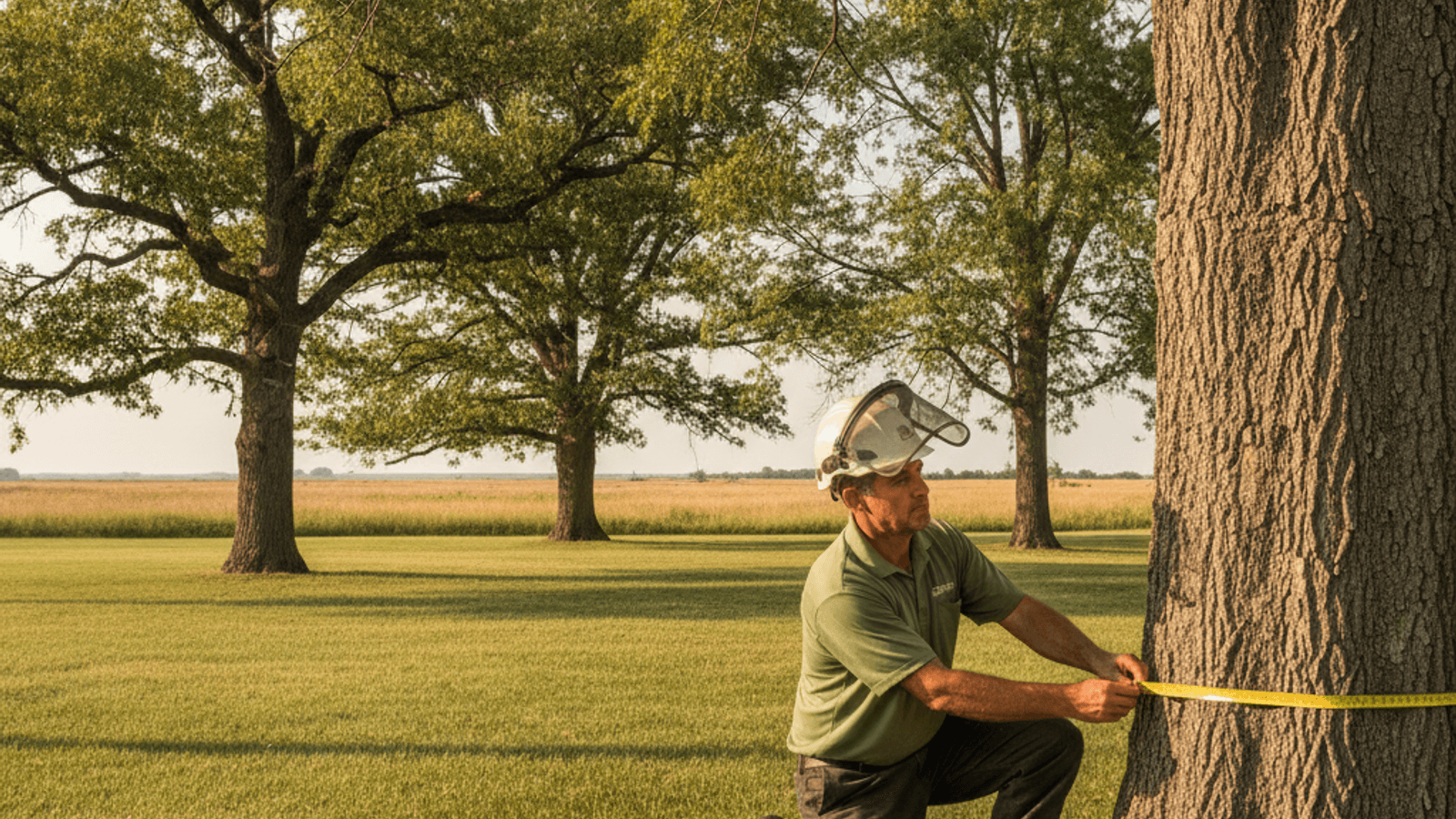
There isn’t one verified flat price for emerald ash borer treatment. Treatment is quoted after the provider confirms species, measures diameter at breast height, names the product, and states the follow-up in the written scope. Size, condition, and access still matter. None of that is a canopy-percentage cutoff.
Ask for a written quote that identifies the diagnosis, treatment product, application plan, included visits, follow-up expectations, exclusions, and total quoted charge. Symptoms such as canopy thinning, exit holes, bark changes, or woodpecker activity can guide an inspection, but they don’t confirm emerald ash borer on their own.
What should an inspection quote include?
A standalone tree health assessment and an arborist consultation are quoted after the provider reviews the tree, access, and the requested deliverable. Neither visit has a flat web price. Ask whether the estimate includes an on-site diagnosis, inspection of multiple trees, written findings, treatment options, and a removal quote when relevant.
Also disclose access limits, gates, nearby structures, utilities, hanging limbs, and other obstacles. Those details help the provider define the visit, but only an on-site assessment can establish the tree’s condition.
How should you compare treatment and removal costs?
Compare complete written scopes, not generic price ranges or canopy percentages. A treatment quote should state the diagnosis, product, included applications, follow-up, limitations, and exclusions. A tree removal quote should state whether removal, hauling, cleanup, and stump work are included.
Access, obstacles, tree condition, and the intended end result can change the proposed work. Ask how nearby structures and utilities affect the plan. Don’t approach hanging branches, unstable damage, or electrical hazards while gathering information.
Stump work and replanting may be separate decisions. Stump grinding reduces the visible stump but doesn’t mean the entire root system is removed. Ask each provider to identify exactly what will remain when the quoted work is complete.
What should a treatment proposal explain?
The proposal should identify the product, application approach, reason for recommending it, follow-up plan, expected limitations, and total quoted scope. Don’t assume every product follows the same schedule or that one application guarantees an outcome.
Ask the provider what qualifications are required for the proposed work and how you can verify them. You can also request proof of insurance before authorizing service. These questions are more reliable than assuming a credential or rule applies without checking the current requirements and the work being offered.
Why does an accurate diagnosis affect the estimate?
The provider’s findings determine whether the quote addresses emerald ash borer or another cause of decline. Similar symptoms can arise from several problems, and canopy appearance alone doesn’t predict treatment success.
Our guide to spotting emerald ash borer in Shawnee County covers observations you can document before the visit. The property’s neighborhood or age doesn’t establish the tree’s species, condition, access, or diagnosis.
Frequently asked questions
How much does emerald ash borer treatment cost?
The cost depends on the provider’s findings, species, diameter at breast height, tree condition, access, proposed product, and included follow-up. Request a written estimate after an on-site assessment, and confirm whether the inspection carries a separate charge. There is no flat web price for treatment.
Is treatment cheaper than removing the tree?
It depends on the written scopes and the tree’s assessed condition. Compare the full treatment plan, follow-up, limitations, and exclusions with removal, hauling, cleanup, and stump work. A provider shouldn’t promise an outcome from appearance alone.
How often does a treated ash tree need follow-up?
The follow-up plan depends on the product, diagnosis, tree condition, and provider’s written instructions. Ask for the schedule and future charges before approving treatment. Don’t treat a generic interval as a guarantee of protection.
What qualifications should I verify before treatment?
Ask the provider what qualifications apply to the proposed product and application, then verify those credentials with the appropriate issuing authority. Also request proof of insurance and a written treatment scope before work begins.
Can I tell if my ash tree is still worth treating myself?
Not reliably from one symptom or a canopy percentage. Photograph visible changes from a safe location, then ask a provider to assess the diagnosis, tree condition, structural damage, access, and treatment limitations before you spend on either option.
Topeka Tree Pro connects Greater Topeka homeowners with independent insured tree-service providers. Call (785) 333-4052 to request an estimate. Confirm the provider’s estimate or visit fees, availability, and treatment and removal options in writing.