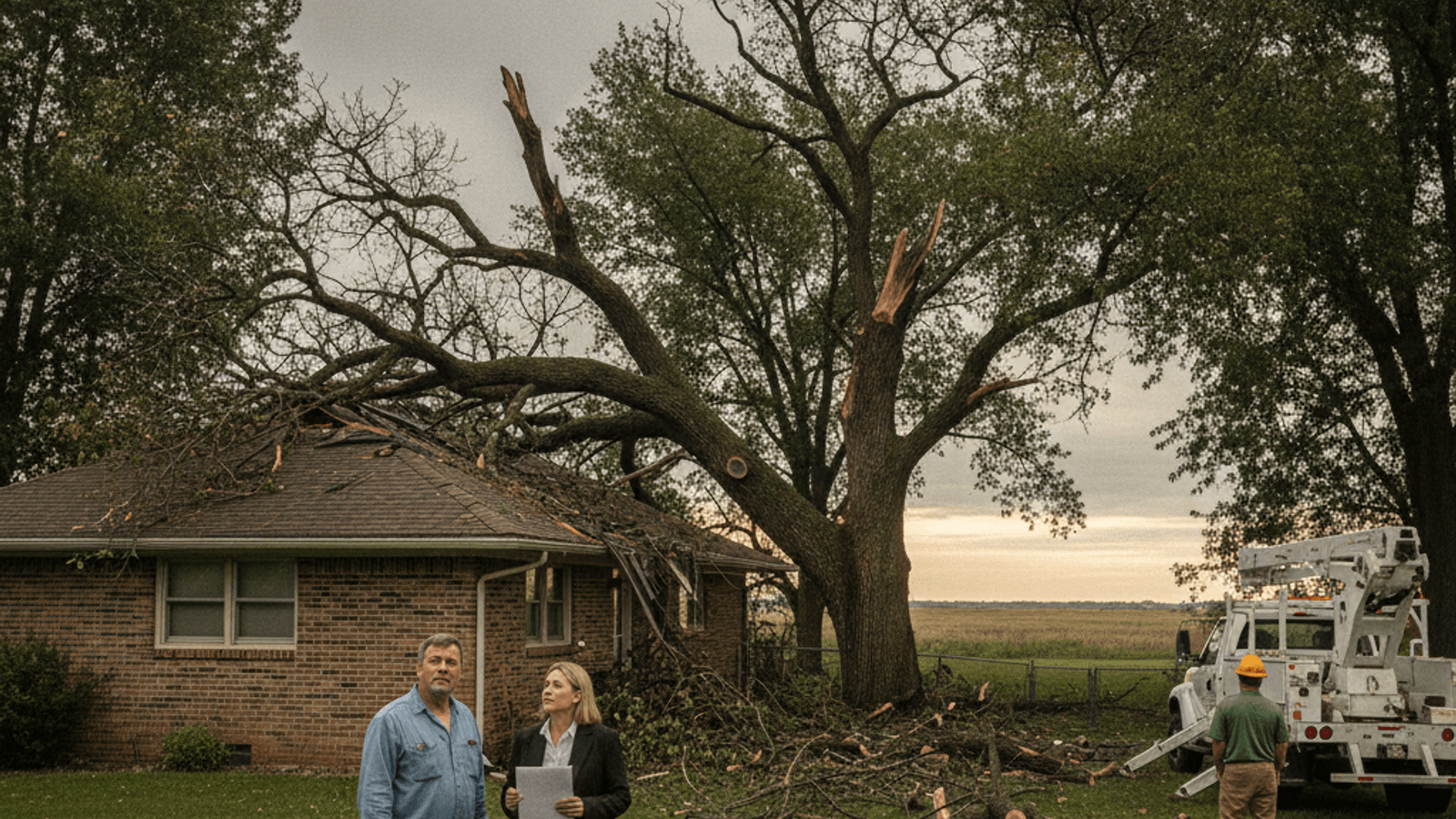
Whether homeowners insurance covers tree removal in Topeka depends on the policy, cause of loss, resulting damage, exclusions, deductible, and removal limits. Contact your insurer before assuming a fallen tree is covered. Keep people away from unstable branches and downed power lines while you document the scene from a safe location.
This guide explains what to check in your policy, what to ask the insurer, and how to compare tree-removal estimates. Your insurer or agent must confirm how the actual policy applies to the loss.
Does homeowners insurance cover tree removal? Here’s when yes, and when no
Policy language controls the answer. Review the declarations, covered causes of loss, exclusions, deductible, debris-removal provisions, and any conditions tied to damage or blocked access. Then ask the insurer to identify the language it is applying to your claim.
Record what caused the loss if that can be done safely, but don’t diagnose the tree from a broken trunk or visible decay alone. Similar symptoms can have several causes. A qualified tree-health assessment can evaluate the tree’s condition, while the insurer decides whether that condition affects coverage.
If a tree fell without striking a structure, ask specifically whether the policy addresses debris removal, driveway access, or accessible entry. Don’t begin non-emergency work based only on a general article or another homeowner’s claim result.
What if the tree blocks access?
Some policies address removal when a fallen tree blocks a driveway or an accessible route, but the wording, conditions, and limits vary. Ask your insurer whether your policy includes that provision and what documentation it requires. If the tree creates an immediate safety or electrical hazard, keep clear and contact the appropriate utility or emergency service.
How much insurance actually pays toward the job
Your policy may apply a deductible, a debris-removal limit, separate coverage provisions, or other conditions. Read the declarations and applicable endorsements, then ask the insurer to confirm the amount available for this specific loss in writing.
Request a tree-service estimate that clearly describes the work. Useful scope items include access, tree condition, removal, hauling, stump work, obstacles, and the intended end result. Keep tree work separate from building repairs when the insurer requests separate estimates, but let the adjuster confirm how each item will be categorized.
Whose insurance pays when it’s your neighbor’s tree
When a neighbor’s tree falls on your property, notify your own insurer and provide the ownership information you know. Don’t assume which policy must pay or whether another party was negligent. Coverage and responsibility depend on the facts, policy language, and applicable law.
Preserve photographs, prior written notices, inspection records, and communications about the tree. Give those materials to the insurer and obtain legal advice if ownership, negligence, trimming rights, or deliberate damage is disputed. Our Topeka tree removal permit and licensing guide outlines questions to investigate, while the guide to a tree damaged by a neighbor explains what information to preserve.
Getting the claim approved without losing money on the process
Contact the insurer before non-emergency cleanup when it is safe to wait. Ask what temporary work is authorized, whether inspection or preapproval is required, and how receipts and photographs should be submitted.
Photograph visible damage from a safe location before material is moved. Stay clear of downed power lines, hanging branches, and unstable trees. Don’t stand beneath damaged limbs or cut branches under tension. The guide to fallen tree damage on a roof or fence provides a documentation checklist.
Ask each storm-damage cleanup provider or emergency tree-service provider for a written quote showing removal, hauling, stump work, access constraints, and other included work. Topeka Tree Pro connects Greater Topeka homeowners with independent insured providers. Confirm availability, qualifications, insurance, written scope, and any required permissions directly with the matched provider.
Frequently asked questions
Does homeowners insurance cover tree removal if the tree didn’t damage anything?
It depends on the policy. Ask whether its debris-removal terms cover a fallen tree that did not damage a structure, including any provision for blocked driveway or accessible entry. Confirm the answer and applicable limit with the insurer.
Does it matter whose tree it was if it falls on my house?
It can matter, but ownership alone doesn’t settle coverage or responsibility. Notify your insurer, document where the tree stood, and preserve relevant communications. Let the insurers or qualified legal counsel evaluate the policies, facts, and any negligence dispute.
Is a dead or diseased tree ever covered if it falls in a storm?
Possibly, depending on the policy, cause of loss, exclusions, and evidence. A visible symptom alone doesn’t establish why a tree failed. If decline is suspected, arrange a qualified assessment and keep the resulting records. A tree-risk assessment guide explains what a professional may examine, but the insurer decides how the policy applies.
How much will my deductible affect a tree damage claim?
The applicable deductible and claim terms come from your policy. Compare the insurer’s written coverage explanation with the documented repair and removal estimates. Ask your agent how a claim inquiry or filing may affect your account before deciding what to do.
If a tree has come down on your Topeka property, call Topeka Tree Pro at (785) 333-4052. We’ll connect you with an independent insured provider so you can verify availability, qualifications, written scope, and insurance details directly.