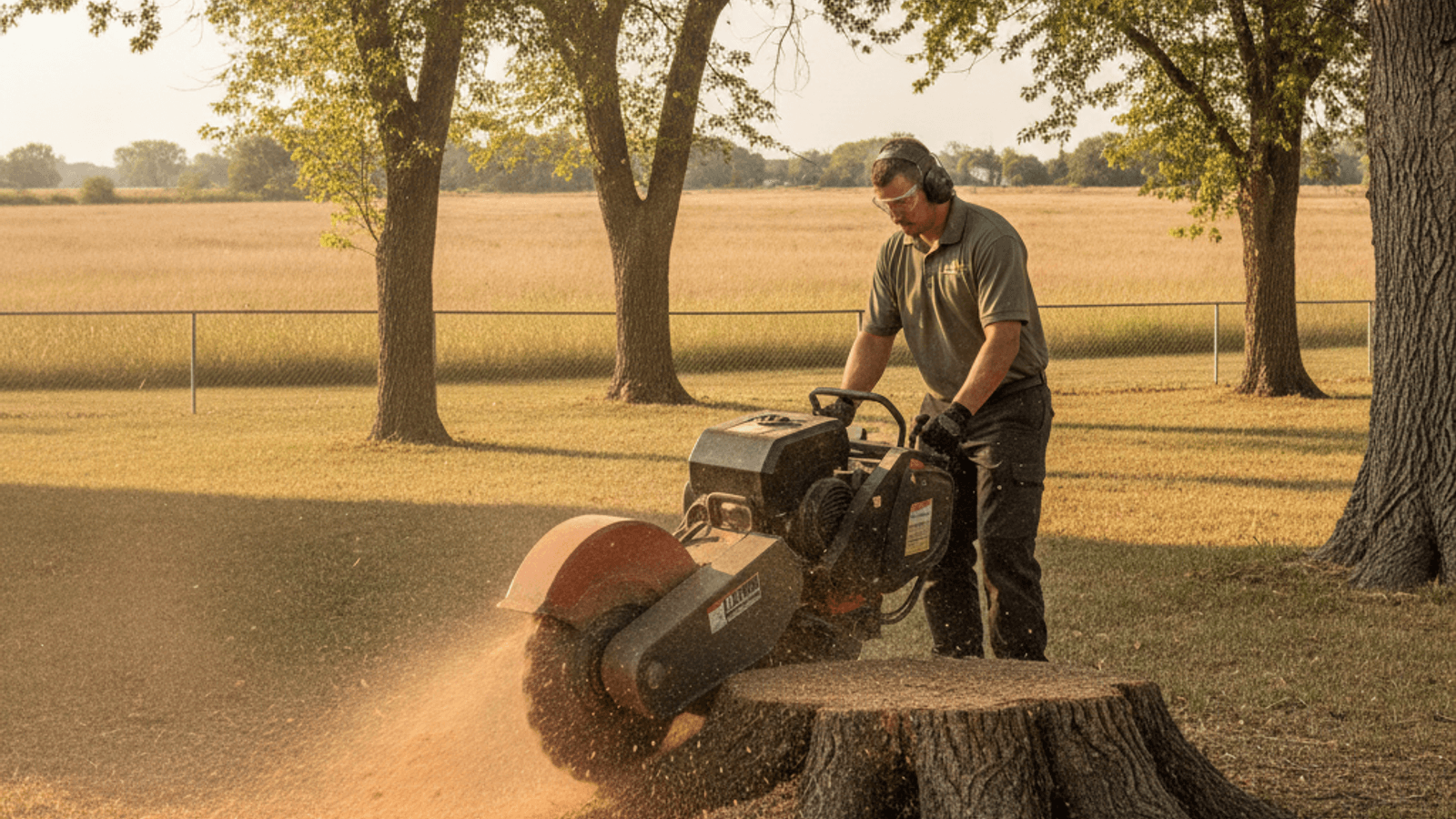
Stump grinding cost in Topeka depends on the actual stump, access, obstacles, root flare, requested depth, debris handling, and site conditions. A provider needs an accurate view of the work area before quoting it. Ask for a written estimate stating what grinding, cleanup, and surface restoration are included.
What actually drives stump grinding cost in Topeka
Four things move a quote up or down: stump diameter, root spread, access for the grinder, and how deep the crew has to cut. A wider trunk simply means more wood to chew through, and that adds machine time. Root spread matters separately from diameter, since a stump can be narrow at the surface but still be feeding a wide network of shallow roots underground, which is exactly the profile of a cottonwood or silver maple.
Access also affects the scope. Ask the provider to inspect gates, fences, sheds, foundations, slopes, landscaping, and the route to the stump. The written quote should state any access limits and how nearby obstacles change the proposed work.
How does stump size affect stump grinding cost in Topeka?
A larger stump can require more grinding than a smaller one, but diameter alone doesn’t establish the quote. Root flare, surface roots, decay, nearby obstacles, access, and the requested finish can change the work.
Stump grinding is listed at $175-$500 or more, separate from removal, in Wellnitz Tree Care’s undated cost guide. The publication date isn’t established. That range is one named provider’s published illustration, not a Topeka Tree Pro price, a local average, or a verified 2026 rate.
Compare estimates using the same measured stump and the same intended result. Ask whether each quote covers only the central stump or also visible surface roots. The scope should also state the finish depth, debris handling, backfilling, and any lawn or surface restoration.
Species may inform the provider’s assessment, but a species name or neighborhood doesn’t prove root spread, wood condition, regrowth, or access on an individual property.
Does bundling stump grinding with removal change the quote?
It can, but a combined visit doesn’t guarantee a lower price. Ask the provider to quote tree removal with and without stump work. The written scope should show whether equipment setup, hauling, stump debris, and surface restoration are shared or separate items.
For multiple stumps or a lot clearing project, identify every stump and compare a combined scope with separate work. Confirm which stumps, visible roots, and cleanup tasks are included rather than relying on a per-stump assumption.
Whether a cut stump needs grinding depends on the intended use of the area, visible regrowth, access, and the condition of the site. Our guide to land clearing cost around Topeka explains how to compare the broader clearing scope.
Why does the requested grinding depth matter?
Grinding depth helps define the work, but it doesn’t prove the entire root system is gone. Connected roots may remain outside the ground area covered by the machine. Regrowth can also depend on the species, root condition, and how much connected material remains.
Ask whether the stump grinding quote covers leveling near grade, a deeper finish for replanting, visible surface roots, debris removal, and backfilling. Our guide to why Topeka cottonwood stumps keep sprouting explains why cutting or grinding visible wood doesn’t establish that connected roots are gone.
Any below-grade work also requires attention to buried facilities. Review who has to contact Kansas 811 before stump grinding and identify private lines separately.
Do site conditions affect a stump grinding quote?
Yes. Actual moisture, drainage, soil condition, slope, access, and nearby surfaces can affect the proposed work. Both excessive and insufficient moisture can create tree and site problems, so the provider should assess the work area rather than infer conditions from the county or season.
A property near North Topeka still needs its own inspection. Geography doesn’t establish a stump’s root spread, soil depth, grind radius, finish depth, or price.
How should you compare DIY and professional stump grinding?
Compare the complete task, not only the initial charge. Account for equipment access, buried utilities, private lines, nearby structures, debris handling, surface restoration, and the intended use of the area. A grinder can contact hidden facilities or throw material, so the work area and equipment plan matter.
Chemical treatment isn’t interchangeable with grinding or root removal. Its suitability depends on the stump, product label, site, and intended result. Ask a qualified provider what outcome each option can realistically deliver before choosing one.
Frequently asked questions
Does stump grinding cost less when bundled with tree removal?
It may change the quote, but bundling doesn’t guarantee a lower price. Ask for a combined written scope and compare it with separate removal and grinding estimates. Confirm equipment setup, hauling, stump debris, and restoration in each option.
How deep does a stump need to be ground?
The required depth depends on the intended finish and the provider’s assessment. Ask the quote to state the planned depth, grinding area, treatment of visible roots, debris handling, and restoration. No stated depth proves the entire root system is gone or guarantees no regrowth.
Do cottonwood and silver maple stumps always cost more?
No fixed price follows from the species name alone. The provider should assess actual diameter, root flare, visible surface roots, decay, access, obstacles, requested depth, and cleanup. Those observed conditions belong in the quote.
Does grinding multiple stumps at once save money?
It can change the estimate, but savings aren’t guaranteed. Ask the provider to price a combined scope and separate scopes. Confirm which stumps, roots, setup, hauling, cleanup, and restoration each estimate includes.
Is it worth grinding an old stump?
It depends on the area’s intended use and the stump’s actual condition. Consider trip exposure, mowing access, visible decay, regrowth, nearby structures, and future planting. Age alone doesn’t determine grinding time, root spread, or price.
An accurate stump grinding estimate requires the actual stump, access, obstacles, site conditions, and intended finish. Topeka Tree Pro connects Greater Topeka homeowners with independent licensed and insured tree-service providers. Call (785) 333-4052 to request an estimate, then confirm estimate or visit fees, the written scope, and qualifications.